
Fearful or Stubborn? How to Tell What's Really Driving Your Dog's Behavior
You call your dog’s name. Nothing. You ask for a sit—they stare blankly or look away. You try again, louder this time, and still get nowhere. It’s tempting to label this behavior as stubborn, defiant, or even spiteful. But here’s what most dog owners don’t realize: what looks like stubbornness is often something entirely different.
Fear, anxiety, confusion, and stress can all make a dog appear unresponsive or willfully disobedient. The difference matters enormously—because the training approach that works for a genuinely stubborn dog can actually make a fearful dog worse. Understanding fearful vs stubborn dog behavior is essential because the training approach that helps one can actually make the other worse.
At The Mannered Mutt, we help dog owners throughout Montgomery County look beyond surface behaviors to understand what their dogs are actually communicating. Once you learn to read the signals, everything changes.
What’s the Difference Between Fearful vs Stubborn Dog Behavior?
The distinction between fear and stubbornness comes down to emotion versus motivation. A fearful dog is experiencing a stress response that makes compliance difficult or impossible. A stubborn dog understands what you’re asking but has learned that ignoring you works better than listening.
How Does Fear Affect Dog Behavior?
Fear triggers a physiological response in dogs—just as it does in humans. When a dog perceives a threat, their body floods with stress hormones like cortisol and adrenaline. This activates the survival response: fight, flight, or freeze.
A dog in this state isn’t choosing to ignore you. Their brain has shifted into survival mode, which suppresses the prefrontal cortex—the part responsible for learning, problem-solving, and responding to cues. According to veterinary behaviorists, a dog experiencing fear literally cannot process commands the way they would in a calm state.
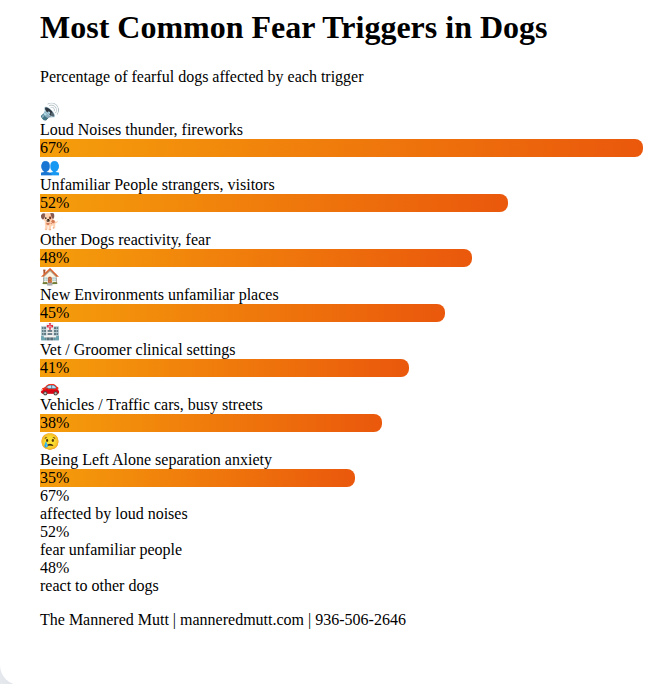
Common triggers for fear responses include loud noises, unfamiliar environments, new people or animals, past trauma, and even subtle changes in routine that humans might not notice.
What Does Stubbornness Actually Look Like in Dogs?
True stubbornness—what trainers often call “learned non-compliance”—looks different. A stubborn dog is calm, relaxed, and fully capable of responding. They’ve simply learned through experience that ignoring certain cues has no real consequence, or that doing something else is more rewarding.
For example, a dog who ignores the “come” command at the dog park isn’t necessarily afraid—they’ve learned that staying with their friends is more fun than returning to you. This isn’t defiance in the human sense; it’s simple canine logic. Dogs repeat behaviors that work for them.
The critical difference: a stubborn dog shows relaxed body language, while a fearful dog shows stress signals—even subtle ones you might miss.
How Can You Read Your Dog's Body Language to Identify Fear?
Canine body language is a complete communication system that most owners never fully learn to interpret. Dogs constantly broadcast their emotional state through posture, facial expressions, ear position, tail carriage, and dozens of subtle signals called “calming signals.”
What Are the Physical Signs of Fear and Anxiety?
A fearful dog displays specific physical markers that indicate stress. Learning to recognize these signs helps you understand when your dog is struggling rather than being defiant.
Clear fear signals include:
- Whale eye (half-moon eye): The whites of the eyes become visible as the dog looks away while keeping their head still
- Lip licking or tongue flicking: Quick, repeated licks when no food is present
- Yawning: Exaggerated yawning unrelated to tiredness
- Panting: Heavy breathing when the dog isn’t hot or hasn’t exercised
- Tucked tail: Tail held low or pressed against the belly
- Lowered body posture: Crouching, cowering, or trying to appear smaller
- Ears pinned back: Ears flattened against the head
- Trembling or shaking: Visible body tremors
- Avoidance: Looking away, turning away, or attempting to leave
These signals often appear in clusters. A dog showing three or four of these signs simultaneously is almost certainly experiencing fear or anxiety—not stubbornness.
What Does Relaxed, "Stubborn" Body Language Look Like?
A dog who is simply choosing not to comply looks entirely different. Their body language communicates comfort and confidence, not distress.
Relaxed non-compliance looks like:
- Soft, relaxed eyes: No tension around the face
- Neutral ear position: Ears in their natural resting state
- Loose, wiggly body: No stiffness or tension
- Tail in neutral or wagging position: Not tucked, not rigid
- Normal breathing: No panting or heavy sighing
- Direct or casual eye contact: Not avoiding gaze
- Engaged with environment: Sniffing, exploring, or watching something interesting
If your dog shows these relaxed signals while ignoring you, you’re likely dealing with a training or motivation issue—not an emotional one.
| Signal | Fearful Dog | Relaxed “Stubborn” Dog |
|---|---|---|
| Eyes | Whale eye, avoiding gaze | Soft, direct eye contact |
| Ears | Pinned back, flattened | Neutral, forward, or relaxed |
| Body | Crouched, tense, trembling | Loose, wiggly, confident |
| Tail | Tucked or low | Neutral or wagging |
| Breathing | Panting, heavy | Normal, relaxed |
| Overall impression | Trying to escape or disappear | Comfortable, distracted |
Why Do So Many Owners Mistake Fear for Stubbornness?
This misinterpretation happens constantly, and it’s not because owners don’t care—it’s because fear in dogs doesn’t always look like fear in humans. Many owners struggle to recognize fearful vs stubborn dog behavior, especially when stress causes dogs to shut down rather than react dramatically.
How Does Fear Manifest Differently Than Expected?
Many owners expect a fearful dog to cower dramatically, whimper, or try to run away. While some dogs do show obvious fear, many others display what behaviorists call “shut down” behavior—becoming still, quiet, and unresponsive.
A shut-down dog isn’t calm. They’ve essentially frozen, waiting for the threat to pass. This freeze response is a survival mechanism, but to an untrained eye, it looks like the dog is simply ignoring you or being difficult.
Other dogs respond to fear with what looks like defiance: refusing to move, planting their feet, or even growling. These behaviors aren’t stubbornness—they’re the dog’s attempt to create distance from something scary or to communicate “please stop.”
What Role Does Context Play in Behavior?
Context matters enormously when evaluating your dog’s behavior. A dog who responds perfectly at home but “refuses” to listen at the veterinarian’s office isn’t being stubborn—the clinical environment triggers stress that overrides their training.
Similarly, a dog who walks beautifully on your quiet street but pulls and ignores you near busy traffic isn’t suddenly stubborn. They’re likely experiencing sensory overload or low-level anxiety from the noise and movement.
Ask yourself: Does my dog behave differently in different environments? If the answer is yes, fear or anxiety is likely playing a role.
How Should You Respond to a Fearful Dog Versus a Stubborn Dog?
Once you’ve identified whether fear or stubbornness is driving the behavior, your response should differ significantly. Using the wrong approach can make problems worse.
What's the Right Approach for Fearful Behavior?
A fearful dog needs reassurance, not correction. Punishing or pressuring a scared dog increases their stress and can create lasting behavior issues, including aggression born from defensive fear.
For fearful dogs:
- Reduce pressure immediately: Stop asking for the behavior and give your dog space
- Create distance from triggers: Move away from whatever is causing the fear response
- Use calm, quiet body language: Avoid direct eye contact and looming postures
- Allow decompression time: Let your dog recover before trying again
- Work with a professional: Behavior modification from an experienced trainer can address root causes
The American Veterinary Society of Animal Behavior (AVSAB) emphasizes that fear-based behaviors require patience and positive reinforcement—never punishment, which only confirms to the dog that their fear was justified.
What's the Right Approach for Stubborn Behavior?
A genuinely stubborn dog—one who is relaxed and simply unmotivated—needs a different strategy. The goal is making compliance more rewarding than non-compliance.
For stubborn dogs:
- Increase motivation: Use higher-value rewards that your dog genuinely wants
- Improve consistency: Ensure cues always have consequences (positive or neutral)
- Reduce competing reinforcement: Manage the environment so ignoring you doesn’t “work”
- Build engagement: Training exercises that make paying attention to you fun and rewarding
- Practice in low-distraction environments first: Build reliability before adding challenges
Many dogs labeled “stubborn” simply haven’t been taught clearly enough, or the reinforcement history favors ignoring the owner. This is a training problem with training solutions.
What If You're Still Not Sure What's Driving Your Dog's Behavior?
Sometimes the line between fear and stubbornness isn’t clear—especially when a dog has learned to mask their anxiety or when multiple factors are at play.
When Should You Consult a Professional?
Consider seeking expert help if:
- Your dog’s behavior has changed suddenly without obvious cause
- You see any signs of aggression (growling, snapping, lunging)
- Your dog shows fear responses in multiple environments
- Training efforts haven’t improved the behavior after several weeks
- Your dog seems anxious, stressed, or unhappy overall
- You’re unsure whether fear or stubbornness is the root cause
A professional trainer or veterinary behaviorist can assess your dog’s behavior in context, identify subtle signals you might miss, and develop a customized plan that addresses the actual problem—not just the symptoms.
How Does Professional Assessment Work?
During a professional assessment, a trainer observes your dog’s body language, responses to various stimuli, and interactions with you. They’ll ask about your dog’s history, daily routine, and the specific situations where problems occur.
At The Mannered Mutt, Paulina brings over a decade of experience as a Master Trainer to every evaluation. This assessment reveals whether your dog is struggling with fear, lacking motivation, confused about expectations, or dealing with something else entirely—like pain or illness that should be evaluated by a veterinarian.
Understanding the “why” behind behavior makes effective training possible.
How Can Understanding Your Dog's Emotions Transform Your Relationship?
When you stop viewing your dog’s behavior through a human lens—assigning motives like spite, defiance, or stubbornness—something shifts. You begin seeing a creature doing their best to navigate a confusing world, often without the skills or confidence they need.
Why Does This Perspective Change Everything?
Dogs aren’t stubborn to punish you. They aren’t fearful to manipulate you. They’re responding to their environment, their history, and their emotional state in the only ways they know how.
Once you understand this, frustration transforms into curiosity. Instead of asking “Why won’t my dog listen?” you start asking “What is my dog experiencing right now?” That question opens the door to real solutions.
The bond between you and your dog strengthens when they feel understood rather than constantly corrected. Dogs who trust their owners show more willingness to engage, more confidence in new situations, and more reliable responses to training.
Partnering with The Mannered Mutt for Lasting Behavior Change
Whether your dog is fearful, unmotivated, or somewhere in between, the solution starts with understanding. At The Mannered Mutt, we specialize in looking beyond surface behaviors to identify what’s actually driving your dog’s actions.
Our Private Lessons provide one-on-one guidance for owners who want to learn their dog’s unique communication style. For dogs dealing with deeper fear or anxiety issues, our Board & Train programs offer intensive behavior modification in a supportive environment.
Dog owners throughout Montgomery County—from The Woodlands to Conroe—have discovered that what they thought was stubbornness was actually fear, and what they thought was hopeless was actually solvable.
Ready to understand what’s really driving your dog’s behavior? Contact us to schedule an assessment and take the first step toward a calmer, more connected relationship with your dog.
FAQs
Is my dog being stubborn or just scared?
Body language tells the story. A relaxed dog choosing not to listen is likely being stubborn. A dog showing stress signals like tucked tail, pinned ears, panting, or whale eye is acting out of fear, not defiance.
Why does my dog listen at home but not in public?
New environments can trigger anxiety that overrides training. This is common and doesn’t mean your dog is stubborn. Gradual exposure and positive reinforcement help build confidence in new places
How long does it take to help a fearful dog?
Mild fear may improve in a few weeks. More serious anxiety or past trauma can take months. Progress depends on consistency, patience, and working with a qualified trainer.
What’s the best training approach for a stubborn dog?
Increase motivation and clarity. Use high-value rewards, be consistent, and train in low-distraction settings first. Most “stubborn” dogs respond once listening becomes more rewarding.
Do certain breeds tend to be more fearful or stubborn?
Breed can influence tendencies, but personality, socialization, and experience matter more. Any dog can develop fear-based behaviors, regardless of breed.