Why Do Dogs Dig in the First Place?
Understanding the natural and learned reasons behind digging helps you choose the right solution instead of fighting against powerful instincts.
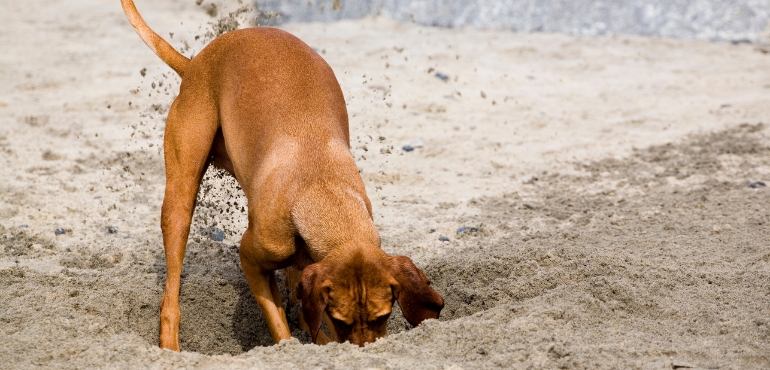
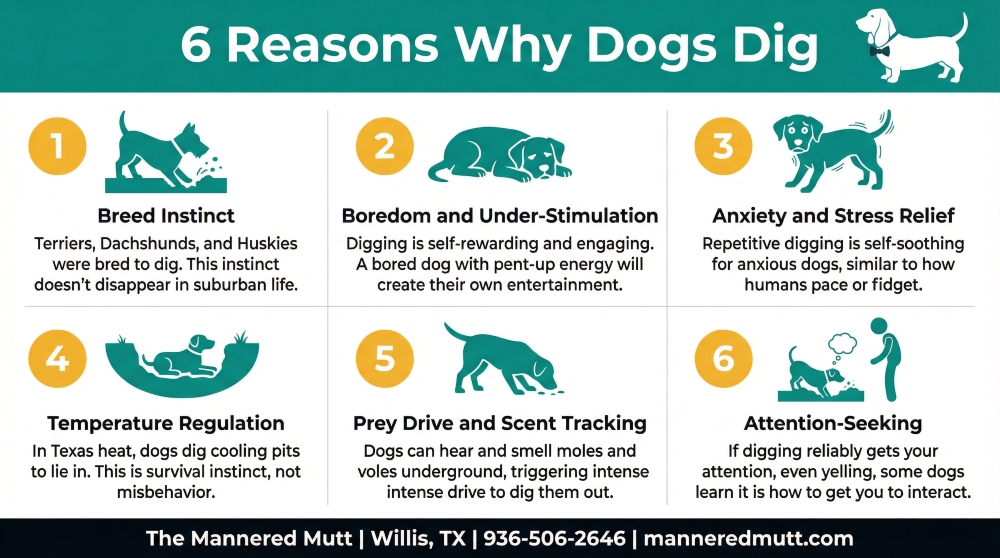
Breed instinct drives many diggers. Terriers were bred for centuries to dig out prey from underground burrows. Jack Russell Terriers, Dachshunds, and Cairn Terriers have powerful genetic drives to excavate. Northern breeds like Huskies and Malamutes dig cooling pits in summer or dens for shelter. Scent hounds dig when following interesting smells underground.
These breed-specific instincts don’t disappear just because your dog lives in suburbia now. A terrier who digs isn’t being bad. They’re doing exactly what generations of selective breeding programmed them to do.
Boredom and insufficient mental stimulation. A bored dog with pent-up energy will find something to do. Digging happens to be engaging, self-rewarding, and uses both physical and mental energy. Dogs left alone in yards for hours with nothing stimulating to do will create their own entertainment.
Think about what digging provides: problem-solving (where to dig?), physical exertion (the actual digging), and discovery (what’s under here?). It’s the perfect boredom buster from a dog’s perspective.
Anxiety and stress relief. Some dogs dig as a coping mechanism for anxiety. Separation anxiety when left alone in the yard. General anxiety from lack of structure or exercise. Stress from environmental triggers like nearby construction or neighborhood dogs. The repetitive physical activity of digging can be self-soothing, similar to how anxious humans might pace or fidget. Your dog isn’t trying to destroy your yard. They’re trying to calm themselves down.
Temperature regulation. In Texas heat, dogs dig cooling pits to lie in. They expose cooler earth beneath the surface where they can regulate body temperature. Dogs also dig to create warm, sheltered dens in cold weather. This is survival instinct, not misbehavior.
Prey drive and scent tracking. If there are moles, voles, or other burrowing animals in your yard, your dog may be digging precisely where these animals tunnel underground. Dogs can hear and smell these prey animals, triggering intense drive to dig them out. This is hunting behavior, deeply instinctual for many breeds.
Attention-seeking behavior. If digging reliably gets your attention (even negative attention like yelling, chasing them, or physically redirecting them), some dogs learn that digging is how to get you to interact. For dogs who lack sufficient positive attention and engagement, negative attention beats being ignored.
What’s Your Dog’s Specific Digging Motivation?
Identifying the “why” behind your dog’s digging determines which solution will actually work.
Identify your dog’s digging type:
- Same spot repeatedly = Likely prey drive (underground animals) or cooling/denning behavior
- Random holes across yard = Boredom, excess energy, general lack of stimulation
- Only when alone = Separation anxiety or boredom from isolation
- Digging under fence line = Escape behavior (wants to get to something outside yard)
- After seeing/smelling something = Prey drive or scent-driven instinct
- Hot days in shaded areas = Temperature regulation (creating cooling pits)
Observation reveals motivation. Spend time watching when and where your dog digs. Do they dig the same spot obsessively? Random locations? Only certain times of day? Only when you’re not watching? The pattern tells you the motivation. Research on individualized behavioral assessment demonstrates that understanding the specific variables influencing behavior is essential for effective treatment—what works for boredom-driven digging won’t work for anxiety-driven digging.
According to research by Villegas, Jessel, and Lemos (2024) on using the Doggy Issues and Guidance (DIG) Assessment Tool, individualized behavioral assessment helps identify “relevant variables that influence behavioral problems” in dogs, allowing for “reinforcement-based treatment” tailored to each dog’s specific issues. This same principle applies to digging—assessing the individual motivation rather than assuming all digging has the same cause.
Digging Type | What It Looks Like | Most Likely Cause | Best Solution Approach |
Focused excavation | Same 1-3 spots, deep holes, intense focus | Prey animals underground | Address prey drive, block access, provide scent work outlet |
Random scattered holes | Multiple shallow holes across yard | Boredom, excess energy, understimulation | Increase exercise, mental enrichment, structured activities |
Fence line digging | Digging along or under fence | Escape attempt, barrier frustration | Address underlying motivation to escape, reinforce fence, train recall |
Cooling pits | Shaded areas, hot weather, dog lies in hole | Temperature regulation | Provide cooling alternatives (kiddie pool, shade, indoor access) |
Anxiety digging | Only when alone, often near doors/windows | Separation anxiety, general anxiety | Address underlying anxiety, crate training, behavior modification |
Garden/flower bed focus | Specifically targets planted areas | Scent attraction, soft soil texture | Physical barriers, redirect to designated dig area |
How Do You Actually Stop Dog Digging?
Effective solutions address the underlying cause while teaching alternative behaviors, not just punishing the digging itself.
Increase physical exercise significantly. Most digging problems improve dramatically when dogs receive adequate exercise. A tired dog is a well-behaved dog. For high-energy breeds, this means 60 to 90 minutes of vigorous exercise daily.
Not just letting them out in the yard. Structured walks, fetch sessions, running, swimming. Mental exhaustion from exercise reduces boredom-driven digging substantially.
Provide mental stimulation and enrichment. Mental work tires dogs as effectively as physical exercise. Puzzle toys, scent games, training sessions, and food-dispensing toys engage your dog’s brain.
Hide treats around the yard for them to find. Teach new tricks. Practice obedience in different locations. Mentally stimulated dogs are far less likely to dig from boredom.
Create a designated digging zone. For dogs with strong breed drives to dig, fighting the instinct entirely is frustrating for everyone. Instead, build a sandbox or designated digging area. Bury toys and treats in it. Enthusiastically reward your dog for digging there.
When they dig elsewhere, interrupt calmly and redirect to the approved dig zone. This satisfies the instinct while protecting your yard.
Address anxiety at the root. If digging stems from anxiety (particularly separation anxiety when left alone), punishing the digging doesn’t help. The dog needs the underlying anxiety treated through behavior modification.
Manage the environment. If prey animals are triggering digging, pest control may be necessary. For cooling-related digging, provide better temperature regulation. Access to air conditioning. Kiddie pools. Elevated beds that allow air circulation. Plenty of shade and water. Environmental management removes the motivation to dig.
Supervise yard time and interrupt early. Don’t give your dog unsupervised access to the yard for extended periods if they’re digging. When you catch them starting to dig, interrupt with a cheerful “let’s go!” and redirect to an appropriate activity.
Playing fetch. Practicing commands. Digging in their designated zone. Consistent interruption prevents the behavior from being rehearsed hundreds of times.
Build impulse control through training. Dogs with good impulse control can resist the urge to dig even when motivated. Teaching solid “leave it” and “wait” commands helps. Practicing stays despite distractions builds self-regulation.
What Training Approaches Work Best for Digging?
Systematic training addresses both the behavior itself and the underlying causes driving it.
Positive reinforcement for alternative behaviors. When your dog chooses to lie calmly in the yard instead of dig, mark and reward that choice enthusiastically. When they play with a toy instead of excavating, make a big deal about it. Make the right choice more rewarding than digging. Over time, alternative behaviors become the new habit.
Redirect, don’t punish. Yelling at a dog mid-dig or punishing them after the fact doesn’t teach them what to do instead. It just creates stress and confusion.
Instead, interrupt digging early with a redirect to an appropriate activity, then reward the appropriate activity heavily. This teaches what you want, not just what you don’t want.
Structured training sessions. Practice commands like “leave it” specifically around digging scenarios. Set up situations where you can catch your dog considering digging. Use “leave it” before they start. Reward heavily for compliance. This builds the skill of resisting the digging urge even when tempted.
Consistency across all family members. Everyone in the household must respond to digging the same way. Same interruption method. Same redirection. Same rewards for alternatives.
Inconsistency undermines training completely. One person allowing digging while another punishes it creates confusion.
When Should You Seek Professional Training Help?
Some digging situations benefit from professional guidance rather than DIY approaches.
Consider professional help when:
- Digging is driven by severe separation anxiety (dog is distressed and destructive in multiple ways when alone)
- Digging under fences creates escape risk and serious safety concerns
- You’ve tried management and training for four to six weeks without improvement
- Digging is one of multiple behavior problems (anxiety, reactivity, aggression all present)
- Your dog’s breed drive is so strong that home management isn’t sufficient
At The Mannered Mutt, we address digging through our training programs by identifying the root cause and building the skills your dog needs. Our Private Lessons program works in your actual yard environment, teaching both you and your dog better patterns. For dogs needing intensive impulse control and structured training, our Board & Train program builds foundational skills before implementing them at home.
For puppies developing digging habits, our Puppy Manners program establishes good patterns early and provides appropriate outlets for natural digging instincts before they become ingrained problems.
Contact The Mannered Mutt at 936-506-2646 or visit manneredmutt.com to discuss your dog’s digging behavior and develop a customized training plan that addresses the root cause.