

What Should You Actually Focus On in the First 12 Weeks?
Potty Training and House Manners
Crate Training and Settling
Bite Inhibition and Gentle Mouths
Foundational Commands
Consideration | Weeks 8–10 Focus | Weeks 10–12 Focus |
Potty Training | Frequent, scheduled outings; heavy supervision | Predictable routine; fewer accidents indoors |
Crate Training | Short, positive sessions; meals in crate | Longer settling periods; overnight crating begins |
Commands | Name recognition, sit | Down, brief stay, loose leash introduction |
Best For | Building trust and routine | Building consistency and confidence |
Why Does Early Socialization Matter So Much Right Now?
The Window Is Closing Faster Than You Think
What Safe Socialization Actually Looks Like
Signal/Experience | What It Means | What To Do |
Puppy freezes or backs away | Overstimulated or fearful | Remove from the situation; try again at lower intensity later |
Loose, wiggly body language | Comfortable and curious | Continue exposure; pair with treats |
Excessive panting or yawning | Early stress signal | Give a break before pushing further |
Eager approach, soft eyes | Confident engagement | Great opportunity to reinforce with praise |
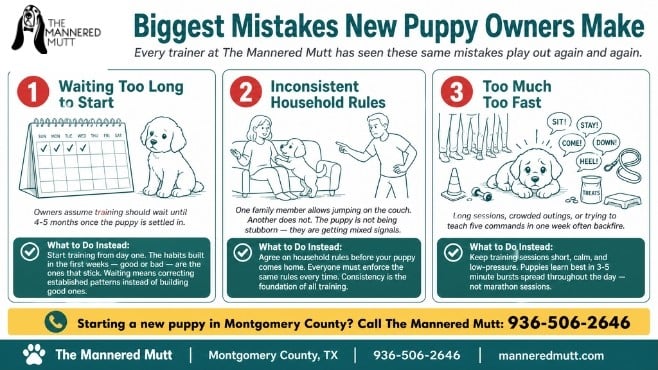
What Are the Biggest Mistakes New Puppy Owners Make?
Waiting Too Long to Start
Inconsistent Household Rules
Overwhelming the Puppy with Too Much, Too Fast
How Do You Build a Realistic Daily Routine for Your Puppy?
A Sample Structure That Works
Building in Rest
When Should You Bring in Professional Puppy Training?
You’re Seeing Signs Worth a Second Opinion
You Want to Get Ahead, Not Catch Up
How Do You Choose the Right Support for Your Puppy’s First 12 Weeks?
Assessing What Your Puppy Needs
Partnering with The Mannered Mutt for Puppy Manners
FAQs
What is the best age to start training a new puppy?
You can start basic training the day your puppy comes home, typically around 8 weeks old. Short, reward-based sessions on simple skills like name recognition and sit are appropriate right away, and starting early helps prevent bad habits from forming in the first place.
How long does it take to potty train a puppy?
Most puppies show significant progress within 4–6 weeks of consistent, scheduled outings, though full reliability often takes closer to 4–6 months. Consistency in timing and immediate praise for outdoor success matter far more than any specific product or method.
Is it too late to socialize my puppy if they're already 10 weeks old?
No, it’s not too late. The critical socialization window extends to roughly 14 weeks, so you still have valuable time. Focus on safe, positive exposure to new sights, sounds, and people in controlled environments. Quality matters more than quantity.
How many hours a day should I spend training my new puppy?
Short sessions of 2–5 minutes, spread out 3–4 times throughout the day, work far better than one long session. Puppies this young have limited attention spans, and brief, positive repetition builds skills faster than lengthy drilling.
Should I hire a professional trainer for a young puppy, or wait until they're older?
Starting professional guidance early, rather than waiting, is one of the most effective ways to prevent behavior problems before they form. Programs like our Puppy Manners class are specifically designed for puppies under 5 months for exactly this reason.