facebook_pixel

Golden Retriever Training: Turn Big Energy Into Focused, Reliable Obedience

Golden Retrievers are smart, loyal, and eager to be part of every family moment. Learn how clear routines, positive training, and real-life practice can turn that big Golden energy into calm, focused behavior at home and beyond.
Golden Retrievers have a way of making themselves part of everything. They greet you at the door with their whole body, carry random objects from room to room, and happily follow you from the kitchen to the couch just in case something exciting happens.
 
That enthusiasm is part of why families love them. It can also become overwhelming when your Golden is jumping on guests, pulling toward every person on a walk, chewing whatever is nearby, or acting like “come” is a suggestion instead of an important cue.
 
At , we help Golden Retriever owners in Willis, The Woodlands, Conroe, Magnolia, and Montgomery County turn big energy into better everyday behavior. The goal is not to make your friendly Golden less happy or less playful. It is to give them clear skills, calm structure, and a job to do so life feels easier for both of you.
 
This guide covers practical Golden Retriever training for puppies and adults, including the obedience skills that matter most, common behavior challenges, and the simple habits that help your dog become a focused, reliable companion.

Are Golden Retrievers Really Easy to Train?

Golden Retrievers are often described as easy to train because they are intelligent, social, and usually eager to work with people. The notes that the breed works in roles ranging from hunting and field work to guide and search-and-rescue work, while also enjoying obedience and other competitive activities. The breed standard describes the ideal Golden as eager, alert, self-confident, friendly, reliable, and trustworthy.
 
Those are great qualities, but they do not mean a Golden Retriever trains themselves. A young Golden can still jump, pull, mouth, chew, bark, ignore recall, or become overly excited around people and dogs. In fact, a friendly, social dog may need just as much guidance as any other dog when they are learning how to manage their excitement.
 
A well-trained Golden Retriever is not simply a dog who knows “sit.” They are a dog who can settle when the family is busy, walk politely without dragging you down the sidewalk, greet guests with four paws on the floor, and come back when called. Those skills are taught through repetition, consistency, and practice in the situations where you need them most.

Why Does Golden Retriever Intelligence Sometimes Create Behavior Problems?

Smart dogs learn fast. That includes the behaviors you want and the behaviors you do not want.
 
If jumping gets attention, your Golden learns that jumping works. If pulling gets them to the person, smell, or dog they want to reach, pulling works. If stealing a shoe starts a fun chase through the house, your dog may decide that shoes are very rewarding.
 
This is not your Golden being “bad.” It is your dog repeating what has paid off before. The good news is that the same intelligence can work in your favor. When you consistently reward calm greetings, loose-leash walking, coming when called, and settling on a bed, those behaviors become more valuable to your dog too.
 

A Golden Retriever does not need to be worn out into good behavior. They need to understand what behavior works, what their day looks like, and how to settle when the fun is over.

That is why the best retriever training balances activity with structure. Exercise matters, but a dog who only learns to go faster and play harder may still struggle to focus. Training teaches your Golden how to use their brain, listen through excitement, and relax afterward.

When Should Golden Retriever Training Start?

Start the day your puppy comes home. You do not need long training sessions or a long list of commands. You need small, positive habits built into normal daily life.
 
Practice coming when called in the house. Reward your puppy for choosing to follow you. Teach them to wait briefly before meals and doors. Let them rest in a crate or puppy pen. Handle their paws, ears, collar, and mouth gently so grooming and veterinary care are easier later. Those small moments become the foundation for Golden Retriever obedience.
 
For puppies, early socialization is also important. The . Safe socialization is not a contest to meet every dog or every person. It is about helping your puppy experience new places, surfaces, sounds, people, and well-managed dogs without becoming overwhelmed.
 
The AKC’s Golden Retriever puppy training timeline also emphasizes that training begins right away and that young Goldens need mental, physical, and social outlets alongside basic obedience. Your puppy does not have to be perfect. They simply need a steady routine that teaches them what you want before they invent their own version of the rules.
 
Adult Golden Retrievers can learn too. If you adopted an adult dog or your once-easy puppy has become a busy adolescent, training can still make a major difference. Start with the skills your dog can do successfully today, then gradually make the environment more challenging.

Which Golden Retriever Obedience Skills Matter Most?

Golden Retrievers are happiest when they understand how to be included in family life. These core skills make a difference in the moments that often feel the most frustrating for owners.
Skill
Why it matters
What success looks like
Loose-leash walking
Keeps walks safe and enjoyable
Your Golden walks with you instead of pulling toward every sight and smell
Recall
Creates safety and more freedom
Your dog turns away from a distraction and comes back when called
Place or settle
Builds an off-switch at home and around guests
Your dog relaxes on a bed while you cook, answer the door, or visit with family
Four paws on the floor
Prevents jumping on people
Your dog greets visitors calmly instead of launching into them
Leave it and drop it
Channels a natural desire to carry and explore objects
Your dog lets go of household items and ignores unsafe items on walks
Door manners
Prevents rushing and chaotic greetings
Your dog waits for direction before moving through a door or gate
Loose-Leash Walking Makes Everyday Outings Easier
Many Golden Retrievers pull because they are excited to get somewhere. They want to greet people, investigate smells, and see what is happening around them. Pulling is not a sign that your dog is trying to be the boss. It often means they have learned that a tight leash gets them closer to what they want.
 
Start in a quiet location where your dog can succeed. Reward them often for walking near you with slack in the leash. When the leash becomes tight, calmly stop or change direction. The walk moves forward when your Golden is walking with you, not when they are towing you along.
 
This takes repetition, especially with a friendly dog who believes every person is a potential new best friend. Be patient. Calm, consistent practice builds better walks than turning the leash into a tug-of-war contest.

Recall Is About Trust, Not Just Obedience

A strong recall gives your Golden Retriever more freedom and gives you more peace of mind. Make coming to you worthwhile. Use a cheerful voice, reward generously, and avoid calling your dog only when fun is about to end.
 
Begin indoors, then practice in a fenced space or on a long line. Add distance and distractions slowly. If your Golden is chasing a squirrel, playing with another dog, or completely overwhelmed by the environment, they may not be ready for that level yet. Step back to an easier practice setup and build success there.

Place Training Gives Your Golden an Off-Switch
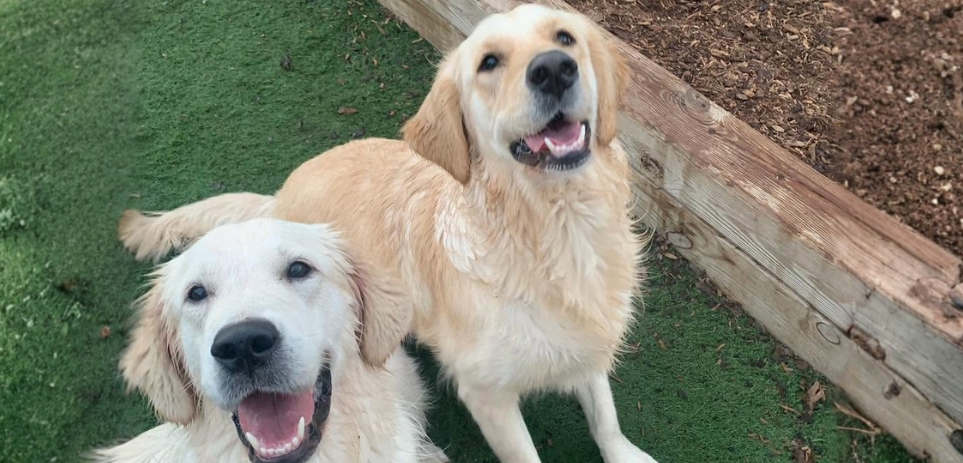
Golden Retrievers often want to be involved in every family activity. That is sweet, but it can become a problem when your dog crowds the kitchen, barks at visitors, follows every movement, or cannot settle while people are talking.
 
Place training gives your dog a clear job. A bed or mat becomes their spot to relax while life continues around them. Start by rewarding your Golden for stepping onto the bed. Then reward a sit, a down, and finally a few seconds of calm staying. Build duration slowly.
This is one of the most helpful skills for a busy family. Instead of repeatedly telling your dog “no,” you can show them exactly what you want them to do.

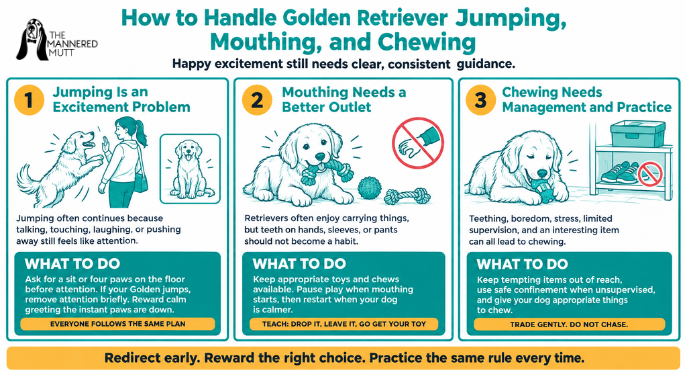
How Do You Handle Golden Retriever Jumping, Mouthing, and Chewing?

These are some of the most common reasons Golden Retriever owners ask for help. They can be especially frustrating because Goldens are usually happy, affectionate dogs. However, happy excitement can still knock over a child, tear up a favorite shoe, or leave you feeling like you cannot have visitors over.
  • Jumping Is Usually an Excitement Problem
Your Golden may jump because it has worked before. People often talk, touch, laugh, or push the dog away. From the dog’s perspective, that is still attention. Teach an alternative greeting. Ask for four paws on the floor or a sit before your dog gets attention. 
 
If your Golden jumps, calmly remove attention for a moment. The instant all four paws are down, reward with praise, a treat, or a calm greeting. Everyone in the home needs to follow the same plan for this to stick.
  • Mouthing Needs a Better Outlet
Retrievers were bred to carry things, so many young Goldens enjoy having something in their mouths. That does not mean you should accept teeth on hands, sleeves, or pants.
 
Keep appropriate chews and toys available. Redirect your dog to those items before they get too excited. If mouthing starts during play, pause the interaction briefly and restart when your dog is calmer. Teaching “drop it,” “leave it,” and “go get your toy” gives your Golden a more appropriate way to use that natural interest.
  • Chewing Needs Management and Practice
Chewing can happen because of teething, boredom, stress, lack of supervision, or simply because your dog found something interesting. Prevent the habit by keeping tempting items out of reach, using safe confinement when you cannot supervise, and giving your Golden appropriate things to chew.
Then teach your dog what belongs to them. Trade gently when they pick up the wrong item. Do not chase them. Chasing can turn stolen items into a fun game and make the behavior stronger.
 

How Much Exercise and Mental Work Does a Golden Retriever Need?

Every Golden Retriever is an individual. Age, health, temperament, and daily routine all matter. Puppies need short, age-appropriate activity and plenty of sleep. Adolescents may seem to have endless energy. Adult dogs still benefit from regular movement, mental engagement, and quality time with their people.
 
The key is balance. A long walk is helpful, but it should not be the only outlet your dog has. Add short training sessions, scent games, retrieving games with rules, food puzzles, and calm settling practice. These activities give your Golden an outlet for their intelligence without teaching them that they must be in motion all day.
 
If your Golden needs more structureTry this practical next step
They are wild when you come homeAsk for a few simple cues, then send them to place before greeting them calmly
They pull on every walkPractice five to ten minutes of loose-leash walking in a quiet area before a longer walk
They steal household itemsOffer a toy trade, reward the drop, and put high-value items away when unsupervised
They cannot settle after playBuild a brief place routine after activity and reward calm breathing and stillness
They seem bored indoorsUse a short scent game or obedience session instead of adding more unstructured excitement
 
You do not need to entertain your Golden Retriever every minute of the day. You do need a predictable routine that includes exercise, training, rest, and time to simply be part of the family.

How Do You Train an Adolescent Golden Retriever?

The teenage stage can catch owners off guard. Your sweet, cooperative puppy may become more distracted, more energetic, and less interested in listening outside the house. The describes the period from roughly six to eighteen months as a time when continued training is particularly important for Golden Retrievers.
 
This does not mean your dog is becoming difficult on purpose. They are growing, learning, and discovering that the world is exciting. Your job is to stay consistent when they are testing the rules.
 
Go back to simple practice when needed. Use a long line for recall work. Prevent jumping before visitors arrive. Choose calmer walk locations while you build loose-leash skills. Reward the good choices you want more of, even when they seem small.
 
Most importantly, do not assume that a behavior is permanent just because your Golden did it perfectly last month. Training is ongoing. The skills you practice through adolescence are the ones you will rely on for years to come.

What Golden Retriever Training Mistakes Should You Avoid?

The most common mistakes are usually made with the best intentions. Golden Retrievers are lovable, and it is easy to excuse a behavior when your dog is young, friendly, and cute. But the habits that feel manageable at 20 pounds can become much harder at 70 pounds.

Assuming Your Golden Will “Grow Out of It”

Your dog may grow out of a few puppy behaviors, but jumping, pulling, barking, and ignoring recall often get stronger with practice. Start teaching the alternative behavior right away.

Using Exercise as the Only Solution

A tired dog may be quieter for an hour, but they still need guidance. Pair exercise with training, mental work, and settling practice so your Golden learns both how to engage and how to relax.

Letting Guests Reinforce Jumping

Visitors often say, “I do not mind,” while giving an excited dog attention. Your Golden hears that jumping is successful. Set up a simple greeting plan before guests arrive, such as place behind a gate or a calm sit before attention.

Expecting Your Dog to Love Every Dog

Golden Retrievers are often social, but not every Golden enjoys every dog or every play style. Do not force interactions. Teach your dog to be calm and neutral around other dogs, then choose playmates and settings that suit your individual dog.

Correcting Instead of Teaching

The . Clear boundaries still matter. The difference is that you teach your dog what you want, reward the right choice, and manage the environment so they can succeed instead of relying on fear or frustration.

When Should You Get Professional Help With Golden Retriever Behavior?

You do not have to wait for a serious problem before asking for help. Professional support can save you time and frustration when you are dealing with pulling, jumping, chewing, barking, poor recall, overexcitement, or a dog who cannot settle.
 
Reach out promptly if your Golden Retriever is growling, snapping, guarding food or furniture, showing fear around people or dogs, or experiencing a sudden behavior change. Pain and medical issues can affect behavior, so a veterinary check is a good first step when behavior changes suddenly or without an obvious reason.
 
For young dogs, can help create a strong start with basic commands, house training, crate routines, leash skills, and better everyday behavior. give you hands-on coaching for the situations happening in your own life. For dogs who need a stronger foundation in commands and distractions, can help build lasting, reliable skills.

How Does The Mannered Mutt Help Golden Retriever Owners in Willis, Texas?

At The Mannered Mutt, we know that a Golden Retriever is more than a family pet. They are the dog greeting every visitor, joining every car ride, carrying a toy around the house, and trying to be part of every moment.
 
Paulina has been a Master Trainer since 2012. Our approach is practical, personal, and built around the real situations you need help with. We work with you to create a plan that makes sense for your dog, your home, and your routine.
 
Whether you need calmer greetings in Magnolia, better leash walks in The Woodlands, stronger recall in Conroe, or help turning puppy chaos into good habits in Willis, we are here to help. or call to find the best place to start.

FAQs

Are Golden Retrievers easy to train?

Golden Retrievers are intelligent and often eager to work with people, but they still need clear rules, consistent practice, and real-life training around distractions.

Start the day your puppy comes home. Begin with short, positive practice around routines, handling, coming when called, settling, and leash basics.

Teach your dog that four paws on the floor earns attention. Remove attention briefly when they jump, then reward calm greetings consistently.

Most Goldens pull because they are excited to reach people, dogs, or smells. Teach that a loose leash moves the walk forward, and practice in quiet areas before adding bigger distractions.

Provide appropriate chews, manage your dog closely, keep tempting items out of reach, and trade calmly when your dog picks up the wrong object. Avoid chasing them.