
Dog Trainer vs. Behaviorist: Who Should You Call?

A well-behaved brindle dog on a leash focusing on its trainer during an indoor obedience session.
If you have been searching for dog trainer vs. behaviorist, you are probably trying to decide what kind of help your dog actually needs. The right first call depends on what you are seeing, how quickly it started, whether your dog may be in pain, and whether anyone could be hurt.
 
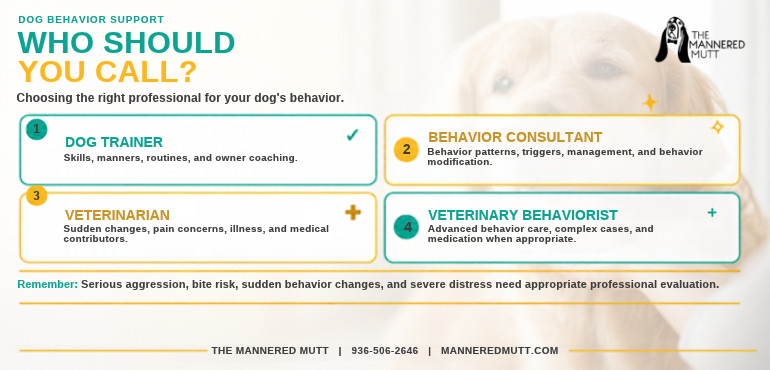
A dog trainer can help with skills, manners, routines, and owner coaching. A veterinarian should be involved when behavior changes suddenly or a medical problem may be contributing. A behavior consultant or veterinary behaviorist may be the better fit for fear, anxiety, serious aggression, bite risk, or a case that is not improving with basic training.
 
At The Mannered Mutt, we believe the goal is not to put a label on your dog. The goal is to identify the safest and most useful next step for your dog and your family.

Which Professional Should I Call First?

Use this table as a starting point, not a diagnosis. When a behavior change is sudden, your dog may be in pain, or someone could be injured, contact your veterinarian and seek appropriate behavior support.
 
ProfessionalA good starting point forWhat they can help with
Dog trainerEveryday skills and mannersObedience cues, leash walking, jumping, recall, settling, routines, and owner coaching
Behavior consultantOngoing behavior patternsTriggers, management, reactivity, fear, resource guarding, and behavior-modification plans
VeterinarianSudden or concerning changesPain, illness, medical contributors, examinations, testing, treatment, and referrals
Veterinary behavioristComplex or high-risk behavior concernsAdvanced behavior assessment, integrated treatment planning, and medication when appropriate
 

Dog Trainer vs. Behaviorist: What Is the Difference?

A dog trainer primarily helps teach behaviors and skills, while a behavior professional evaluates why a behavior may be happening and builds a plan to change it. The titles are not always used consistently, so owners should ask about a professional’s education, experience, methods, scope of practice, and referral process.
 
The word “behaviorist” does not automatically tell you how much training or education a person has. AVSAB’s guidance on selecting a behavior consultant explains that “behavior consultant” is a broad term and that owners should do their homework before hiring someone.
 
A veterinary behaviorist is different. A board-certified veterinary behaviorist is a veterinarian with advanced specialty training in animal behavior. This professional can evaluate medical contributors, diagnose behavior-related conditions, and prescribe medication when appropriate as part of an individualized treatment plan.
 

When Should I Call a Dog Trainer?

Call a dog trainer when your primary goal is to teach skills, improve communication, or build more reliable manners in everyday situations. Training may be appropriate for puppies and adult dogs who need support with behaviors such as pulling, jumping, door rushing, coming when called, settling, or responding to cues around distractions.
 
A trainer can help you:
  • teach foundational cues such as sit, down, stay, place, come, and leave it;
  • build loose-leash walking and calmer greetings;
  • create household routines for puppies and newly adopted dogs;
  • practice skills around visitors, doorbells, neighborhood walks, and other distractions;
  • learn how to reinforce the behavior you want and prevent rehearsal of unwanted behavior;
  • develop an owner practice plan between sessions.
 
Training is not limited to teaching commands. Good coaching helps you understand what your dog is experiencing, adjust the difficulty, and practice in settings that resemble real life.
 
For example, a dog that jumps on guests may need more than a “sit” cue. Your plan may also include managing the doorway, giving the dog a clear place to go, coaching visitors, and practicing calm behavior before the door opens.
 
The Mannered Mutt’s obedience training programs include private training and behavior-focused program options for owners who want support with practical skills and real-world distractions. Program fit depends on the dog, the behavior, the household, and the goals discussed during the evaluation.
 

When Should I Call a Behavior Consultant?

Consider a behavior consultant when the main concern involves fear, anxiety, reactivity, aggression, resource guarding, separation-related distress, compulsive behavior, or another pattern that requires more than teaching a cue.
 
A behavior consultant may help you identify triggers, understand body language, change the environment, create a gradual behavior-modification plan, and teach replacement behaviors. The consultant should also explain what they can and cannot handle and tell you when they would involve a veterinarian or refer to a veterinary behaviorist.
 
  • Because the title is used broadly, ask questions before booking:
  • What education, credentials, and case experience do you have?
  • What behavior concerns do you regularly handle?
  • How do you assess the dog, the environment, and the owner’s goals?
  • What methods and tools do you use?
  • How do you respond when a dog is frightened, aggressive, or unable to learn?
  • Who do you refer to when a case is outside your scope or does not improve?
 
AVSAB’s current trainer-selection guidance recommends seeking advanced veterinary behavior knowledge or a credentialed behavior consultant when fear, anxiety, or aggression are present. It also encourages owners to ask specific questions about methods, education, and the professional’s approach to behavior change.
 

When Should My Dog See a Veterinarian for Behavior?

Your dog should see a veterinarian when a behavior change is sudden, unusual, worsening quickly, or connected to possible pain or illness. A veterinary examination is also important before treating a serious behavior problem as if it were only a training issue.
 
Call your veterinarian if your dog has suddenly started to:
  • growl, snap, or bite when touched or moved;
  • avoid stairs, jumping, walks, or normal handling;
  • react differently around family members or other animals;
  • pace, vocalize, hide, or seem unusually restless;
  • sleep, eat, drink, or eliminate differently;
  • show confusion, unusual sensitivity, or a major change in normal habits.
 
This does not mean every behavior problem has a medical cause. It means health should not be overlooked, especially when the change is sudden or your dog appears uncomfortable.
 
The Merck Veterinary Manual’s guidance on behavior problems in dogs explains that pain can contribute to behavior problems and that medical conditions may play a role in irritability or aggression. Your veterinarian can examine your dog, discuss possible medical contributors, recommend testing when appropriate, and refer you for advanced behavior care.
 

What Does a Veterinary Behaviorist Do?

A veterinary behaviorist combines veterinary medicine with advanced behavior training. This makes a veterinary behaviorist especially appropriate when a dog’s behavior may involve medical factors, severe anxiety, serious aggression, phobias, compulsive behavior, or a need to consider medication alongside behavior modification.
 
The American College of Veterinary Behaviorists explains that board-certified veterinary behaviorists can evaluate medical and behavioral factors, create integrated treatment plans, and determine whether medication may be appropriate. They may work with the owner, primary veterinarian, trainer, and other professionals as part of the dog’s care team.
 
You may want to ask your veterinarian for a veterinary behaviorist referral when:
  • your dog has bitten a person or animal;
  • aggression is escalating or difficult to predict;
  • your dog shows severe fear, panic, or phobic behavior;
  • your dog is injuring themselves or others;
  • anxiety prevents your dog from eating, resting, learning, or participating in daily life;
  • behavior concerns continue despite a thoughtful training plan;
  • medication may need to be considered;
  • there may be a medical or neurological contributor.
 
Availability can vary by location, and appointments may require planning. A primary veterinarian can help you decide how quickly your dog should be seen and whether interim management is needed while you wait.
 

Can a Dog Trainer Diagnose Anxiety or Aggression?

A dog trainer can describe what they observe, identify patterns that affect training, and help you teach safer replacement behaviors. A trainer should not diagnose a medical condition, prescribe medication, or present a serious aggression problem as something that can be solved through obedience commands alone.
 
The same word can describe different situations. A dog that barks and pulls toward another dog may be frustrated, fearful, overexcited, or responding to a learned pattern. A dog that growls when someone reaches toward a painful body area may need veterinary attention before a training plan is chosen.
 
That is why cooperation matters. A trainer can provide useful observations for your veterinarian, and a veterinarian or veterinary behaviorist can help identify health or behavior factors that affect the training plan.
 

Who Should I Call About Dog Aggression?

For any dog aggression involving a bite, a veterinary evaluation and qualified behavior support should be part of the plan. Do not arrange a close greeting, test your dog’s tolerance, or rely on punishment to find out what happens next.
 
Start by creating distance and preventing another incident. Use physical separation, secure barriers, and careful household routines while you arrange professional guidance. If anyone has been injured, seek appropriate medical care and follow local reporting or animal-control requirements.
 
A trainer may be able to help with management and behavior-modification exercises when the case fits their experience and scope. A veterinary behaviorist or credentialed behavior consultant may be needed when the risk is serious, the behavior is escalating, or fear and anxiety are driving the response.
 
The American College of Veterinary Behaviorists’ owner guidance recommends professional help for aggression toward people or other animals because the consequences can be serious. Getting help early gives the team more information and may reduce the chance of repeated rehearsal while the plan is being built.
 

How Do Montgomery County Owners Find the Right Professional?

If you live in Willis, Conroe, The Woodlands, or another Montgomery County community, begin with the professional who matches the urgency and type of concern. For a sudden behavior change or possible pain, call your veterinarian. For serious fear, anxiety, aggression, or bite risk, ask your veterinarian about a referral to a veterinary behaviorist or another qualified behavior professional.
 
For training support, ask local trainers about their experience with your dog’s specific behavior, the services they provide, and the cases they refer elsewhere. You can also use the AVSAB directory or the ACVB Diplomate directory as starting points for locating professionals with advanced behavior credentials.
 
Before booking any professional, confirm:
  • whether they work in your area and in the format your dog needs;
  • whether they handle your dog’s behavior concern regularly;
  • what information they need before the first appointment;
  • what safety steps you should follow while waiting;
  • how they coordinate with your veterinarian or other professionals;
  • what they do when a case is outside their scope.
 
A referral is not a failure. It is part of responsible care when your dog needs a different kind of support.
 

How Can The Mannered Mutt Help?

At The Mannered Mutt, we help owners build practical skills and address behavior goals through individualized training plans. Our current obedience services include in-home private training, real-world distraction work, puppy support, and behavior-focused options for eligible dogs in Conroe, The Woodlands, Montgomery County, Willis, Spring, Magnolia, and Greater Houston, with service fit confirmed through an evaluation.
 
We are a training resource, not a veterinary practice. If your dog has a sudden behavior change, possible pain, severe distress, serious aggression, or bite risk, contact your veterinarian or an appropriately qualified behavior professional. We can discuss whether our training services are a suitable part of the plan after understanding your dog’s behavior, household, safety needs, and goals.
 
You can review The Mannered Mutt’s obedience training options or contact our team to discuss your dog’s age, behavior, training history, and next step.

FAQs

When should I call a dog trainer for behavior problems?

Call a dog trainer for foundational skills, manners, leash walking, recall, jumping, settling, and owner coaching when there is no urgent medical or safety concern.

Contact your veterinarian when behavior changes suddenly, your dog may be in pain, or illness could be contributing to the problem. A veterinarian can assess medical factors and decide whether testing, treatment, or a behavior referral is appropriate.

A veterinary behaviorist is a veterinarian with advanced specialty training in behavior who can evaluate medical and behavioral contributors. They can create behavior-treatment plans and prescribe medication when appropriate.

A trainer can describe behavior, identify triggers, and help teach safer skills, but should not diagnose medical or behavioral conditions or prescribe medication. Serious fear, anxiety, aggression, or bite risk requires veterinary or qualified behavior-professional involvement.

No. “Behavior consultant” is a broad title, while a veterinary behaviorist is a veterinarian with advanced board-certified specialty training in veterinary behavior.