

Montgomery County’s beloved canine companions often grapple with challenges like aggression, anxiety, leash reactivity, and basic manners. These issues can cast a shadow over many households and their cherished furry family members. The Mannered Mutt’s immersive Board and Train program is designed to transform these hurdles into triumphs through expertly tailored behavior modification, a structured daily rhythm, real-world experiences, and steadfast support for you, the owner.
What Are the Most Common Dog Behavioral Issues in Montgomery County?
Across Montgomery County, common behavioral challenges frequently surface as aggressive tendencies, anxiety-driven reactions, and less-than-ideal leash manners. These issues often leave owners feeling frustrated and dogs feeling stressed. Recognizing these patterns early is key to implementing targeted interventions before they become deeply ingrained habits that disrupt family life. For more information, consider obedience dog training.
Common Behavioral Issues Table
| Behavioral Issue | Hallmarks | Estimated Frequency |
|---|---|---|
| Aggression | Lunging, growling, guarding prized possessions | 55.6% |
| Separation Anxiety | Destructive chewing, excessive vocalization when left alone | 85.9% |
| Leash Reactivity & Poor Manners | Pulling, lunging, jumping on people | 65% |
This overview sets the stage for a deeper dive into the specific subtypes and tell-tale signs of each issue, empowering you to identify them in your own dog and understand the foundational steps of our training approach.
What Types of Aggression Affect Dogs in Montgomery, TX?
Aggression in dogs can manifest in several distinct ways—whether directed at other dogs, people, stemming from fear, or involving resource guarding—each demanding a uniquely tailored behavior modification strategy.
Subtypes of Aggression
- Dog-to-dog aggression: snapping, chasing, or fighting when other dogs are near.
- Human-directed aggression: snarling or biting when approached or handled.
- Fear-based aggression: cowering, flight attempts, or defensive behavior when startled.
- Resource guarding: protective behaviors over food, toys, or resting spots.
Identifying the subtype of aggression is crucial for our trainers to select effective desensitization and counterconditioning techniques. Understanding these triggers naturally leads into a better grasp of anxiety and fear signals, which often overlap with aggression.
How Can You Recognize Anxiety and Fear in Dogs?
Anxiety and fear often drive behaviors such as pacing, hiding, incessant barking, and destructive tendencies. These behaviors reflect a dog’s attempt to self-soothe or escape stressors.
Signs of Anxiety
- Pacing and restlessness: indicators of heightened arousal.
- Trembling or cowering: signs that a dog’s fear threshold has been crossed.
- Destructive chewing and digging: often connected to separation anxiety.
- Persistent whining or howling: clear signals of distress when left alone.
Early detection of these signs is invaluable for creating a desensitization plan that gradually reduces sensitivity. As anxiety management improves, dogs also learn to engage calmly on leash—a vital step toward addressing reactivity and poor manners.
What Are the Signs of Leash Reactivity and Poor Manners?
Leash reactivity and poor manners encompass behaviors like pulling, lunging, barking at passersby, and jumping on people. These typically stem from frustration or fear rather than disobedience.
Key Signs
- Pulling forward with a tense body posture.
- Lunging or barking at other dogs or people.
- Jumping up on guests, showing lack of impulse control.
- Excessive sniffing and darting around, signaling poor focus.
Once these behaviors are identified, The Mannered Mutt introduces structured leash-walking protocols and engaging focus games to redirect attention to the handler. This naturally transitions into strategies for managing aggression and anxiety.
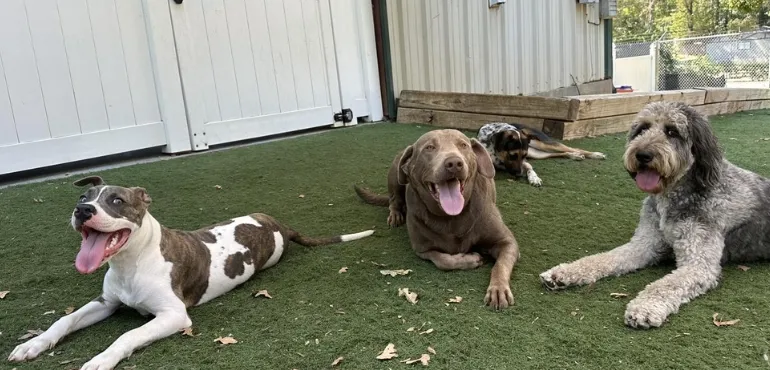
How Does The Mannered Mutt’s Board and Train Program Address Dog Aggression?
The Mannered Mutt’s Board and Train Program addresses aggression by assessing each dog’s unique triggers and thresholds. We then implement a graduated plan that blends positive reinforcement, desensitization, and real-world exposure. This comprehensive method transforms aggressive reactions into calm, controlled behaviors.
Forms of Aggression Treated
- Dog-to-dog aggression: managed with safe, controlled socialization.
- Human-directed aggression: addressed with gentle handling and trust-building.
- Fear aggression: treated with gradual approach exercises paired with rewards.
- Resource guarding: managed with “trade-for-reward” and “leave-it” commands.
Behavior Modification Techniques
| Technique | How It Works | Outcome |
|---|---|---|
| Desensitization | Gradual exposure to triggers | Lowers arousal and reactivity |
| Counterconditioning | Pairing triggers with rewards | Builds positive associations |
| Positive Reinforcement | Rewarding calm, desired responses | Encourages repetition of good behaviors |
| Threshold Management | Monitoring stress limits | Prevents overwhelm and regression |
These approaches help dogs replace fear or frustration with confident, cooperative behavior.
How Is Positive Reinforcement Applied to Aggressive Dogs?
Positive reinforcement rewards non-aggressive behaviors—such as relaxed posture or soft eye contact—with praise or treats. This immediate feedback interrupts the aggression cycle and builds trust between dog and trainer. Over time, dogs generalize these calm behaviors into more complex social situations.
How Does Real-World Exposure Help Reduce Aggression?
Real-world exposure includes park outings, structured sidewalk walks, and supervised playgroups. These controlled environments allow dogs to apply new skills around common triggers. Gradually, they build impulse control and generalize calm responses to everyday scenarios.
How Is Board and Train Used to Manage Dog Anxiety and Separation Anxiety?
Board and train programs are highly effective at managing anxiety by combining structure with desensitization and counterconditioning. Dogs learn to associate alone time and stressors with comfort, predictability, and rewards.
Key Signs of Separation Anxiety
- Frantic scratching at doors.
- Incessant barking or howling during owner absence.
- Destructive escape attempts near exits.
Desensitization and Counterconditioning Methods
Our trainers gradually introduce owner absence cues, like picking up keys, and reward calm behavior. Over time, dogs learn to view departures as neutral or positive rather than threatening.
What Puppy Board and Train Programs Does Montgomery Offer?
Our puppy programs build foundational skills like crate familiarity, potty routines, and socialization. These early interventions prevent future behavior problems and create confident adult dogs.
Benefits of Early Training
- Reduces likelihood of aggression and compulsive behaviors.
- Instills impulse control and obedience.
- Builds positive associations with people, animals, and environments.
Crate and Potty Training
Puppies learn to see crates as secure dens and reliably eliminate outdoors. This structure minimizes accidents, reduces distress, and curbs destructive chewing.
Early Socialization
Puppies experience controlled interactions with vaccinated dogs, gentle handling, and exposure to new surfaces and mild noises. These build resilience and reduce fear of new experiences.
How Does Board and Train Address Leash Reactivity in Montgomery Dogs?
Board and train addresses leash reactivity by teaching focus cues, structured loose-leash walking, and distraction training. This turns stressful walks into calm, cooperative outings.
Causes and Identification
Leash reactivity often stems from frustration, fear, or overstimulation. Signs include lunging, barking, and rigid posture. Trainers identify safe thresholds and design exercises accordingly.
Training Methods
- Marker training for immediate feedback.
- “Look” and “heel” cues introduced in calm settings and then proofed in distractions.
- Focus games to redirect attention to the handler.
Long-Term Success
Sustaining results requires consistent owner practice, refresher sessions, and varied real-world practice. This ensures skills remain strong over time.
What Are the Benefits of Board and Train Compared to Private Lessons?
Board and train offers immersive training with consistent reinforcement, making it ideal for severe issues and busy owners. Private lessons provide flexibility and direct owner participation but rely on consistent follow-through at home.
Advantages of Board and Train
- Immersive, daily reinforcement.
- Faster results for severe issues.
- Professional supervision throughout.
Limitations of Private Lessons
- Relies heavily on owner consistency.
- Scheduling challenges can slow progress.
- Skills may take longer to generalize.
Hybrid Options
Hybrid programs combine immersive board and train with private lessons. This balance accelerates progress while equipping owners with essential skills.
What Can Dog Owners Expect During and After the Program?
Owners can expect a structured daily schedule with training, enrichment, and assessments. Progress is documented through photo and video updates. Weekly summaries outline skills gained and goals ahead.
Duration
Board and train typically lasts two to four weeks, depending on behavior severity and goals. You can consider our board and train services for effective training solutions.
Progress Updates
Owners receive daily updates with media highlights and weekly reports that guide at-home practice.
Post-Program Support
Support continues with hand-off sessions, private follow-ups, lifetime phone/email consultations, and refresher workshops.
Why Choose The Mannered Mutt for Dog Behavior Modification in Montgomery, TX?
The Mannered Mutt distinguishes itself through Paulina’s certified expertise, compassionate approach, and dedication to owner empowerment. Our reputation is built on consistently transforming reactive or anxious dogs into confident companions.
Trainer Expertise
Paulina holds advanced certifications, extensive experience across diverse behavior cases, and a commitment to ongoing research in positive reinforcement.
Personalized Training
Each dog undergoes a detailed assessment to customize session lengths, rewards, and exposure exercises.
Well-mannered dogs and confident owners are the ultimate promise of The Mannered Mutt’s board and train. By investing in a structured, science-based program, you are choosing a pathway to calmer, safer, and more enjoyable companionship. Reach out today to begin your dog’s transformation—lasting success is only a call away.
